
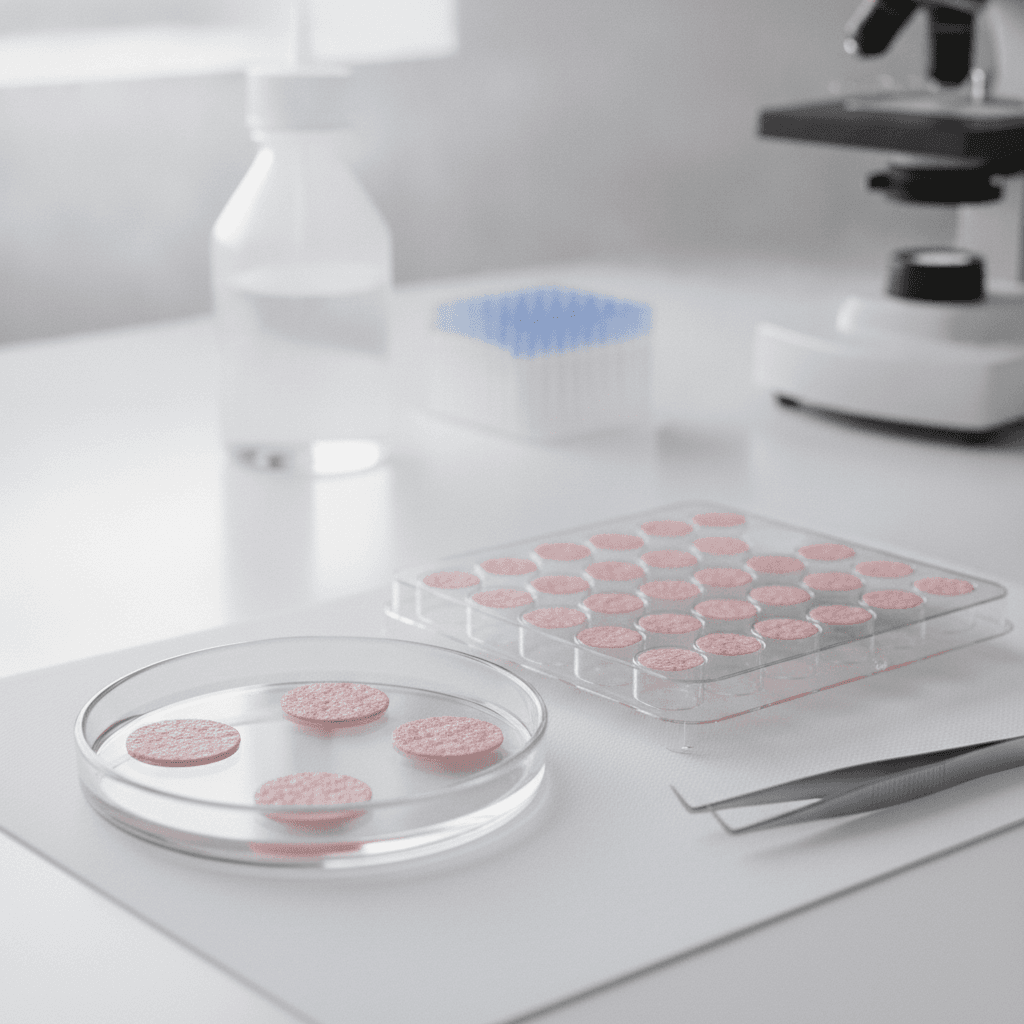
Researchers in Thailand tested pantethine, a vitamin B5 derivative, on a lab-grown 3D model of human psoriatic skin. They report it reduced skin thickening and shifted inflammation-related markers.
Source: Lab study, A full-thickness 3D human psoriatic skin model grown in the lab; no patients. The result is in cells or tissue in a dish. It shows a possible mechanism, not an effect in people.
What was found
The researchers report that pantethine significantly reduced epidermal thickening in the lab-grown psoriatic skin model. They also report that it moved several psoriasis-linked molecular signatures back toward normal.
Pantethine lowered signals tied to inflammation, including IL-1β, TNF-α, IL-17 and S100 family proteins, and reduced activity linked to cell death (caspase-3). It also raised markers linked to antioxidant and immune-regulating responses (Nrf-2 and TGF-β).
Markers of skin barrier and differentiation, including filaggrin, caspase-14 and involucrin, were restored, according to the authors. Markers linked to low oxygen and tissue remodelling, such as HIF-1α and VEGF, were reduced.
Protein analysis showed changes in proteins linked to vesicles, which cells use to communicate, along with lower levels of the exosome markers CD63 and CD9. The authors also describe computer-inferred links to SLIT/ROBO pathways, which they say need further testing.
How it was done
The team first checked pantethine for safety in skin cells called keratinocytes. They then applied it to a full-thickness 3D human psoriatic skin model. They analysed the tissue under the microscope, with staining methods, gene-activity tests and protein profiling.
What it does not show
This work was done in a lab-grown skin model, not in people. It does not show that pantethine works as a treatment for patients with psoriasis, or what dose or route would be needed.
Some news coverage described it as a small human trial. The study itself describes only the 3D skin model.
The authors call pantethine a promising candidate and say some of their findings need further functional validation. The authors declare no conflicts of interest.
Where this fits
This result comes from a lab-grown skin model, so it does not apply directly to people with psoriasis or to anyone taking pantethine or vitamin B5 supplements. Human research on pantethine has mostly looked at other areas, such as blood fats, and this study does not change that. A reader can check which form of vitamin B5 a product contains, since pantethine differs from pantothenic acid, and check any supplement against their medicines.
Read more: Supplement and medication interactions
Who was talking about it
- Genetic Engineering and Biotechnology News on the news (2026-10-27): Genetic Engineering and Biotechnology News reported that a small human trial found the vitamin derivative pantethine alleviates psoriasis symptoms. See the post
- ScienceDaily: Nutrition on the news (2026-11-09): ScienceDaily reported that pantethine may calm overactive immune cells and help fight psoriasis. See the post
The source
This is news, reported from the source above. It is not medical advice and not a recommendation. Talk to your doctor or pharmacist before you change any medicine or supplement.